Designing for Transparency

Helping Homeowners Navigate the Cost of Luxury

The Challenge:

Scottsdale Pools, a high-end custom pool builder in Arizona, faced a dual challenge: their sales team was overwhelmed by unqualified leads, while prospective customers were frustrated by the lack of pricing transparency on the website.

The Approach:
Design a web based swimming pool estimator that is both user-friendly and conversion-focused.
Prioritize progressive disclosure and visual storytelling.
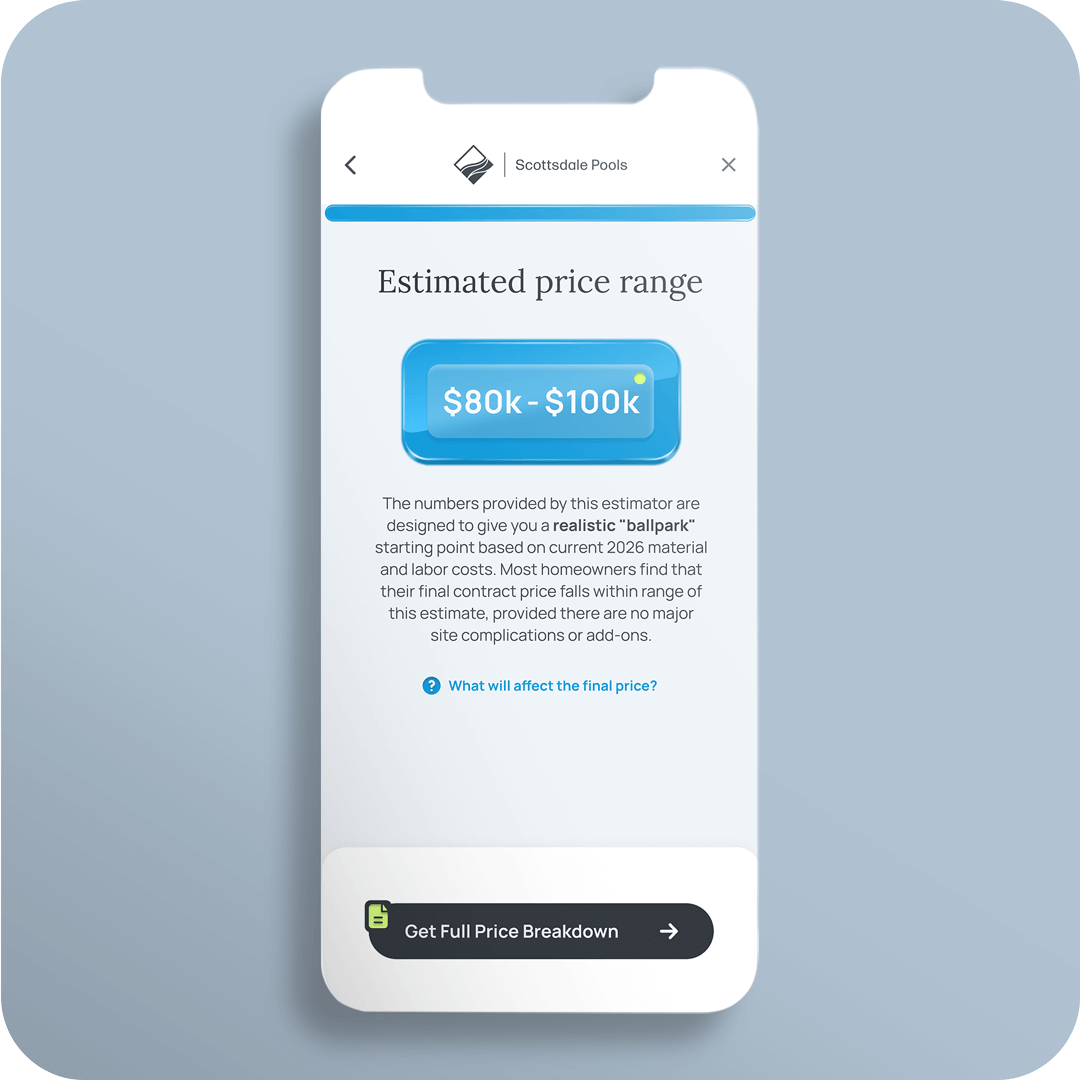
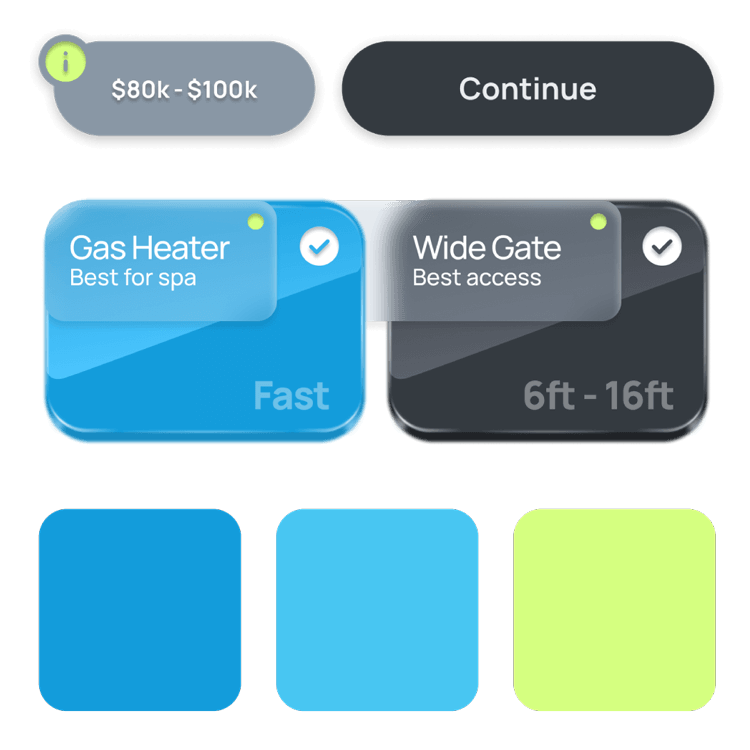
Dynamic, real-time cost that updates as they toggle choices, providing immediate price transparency.
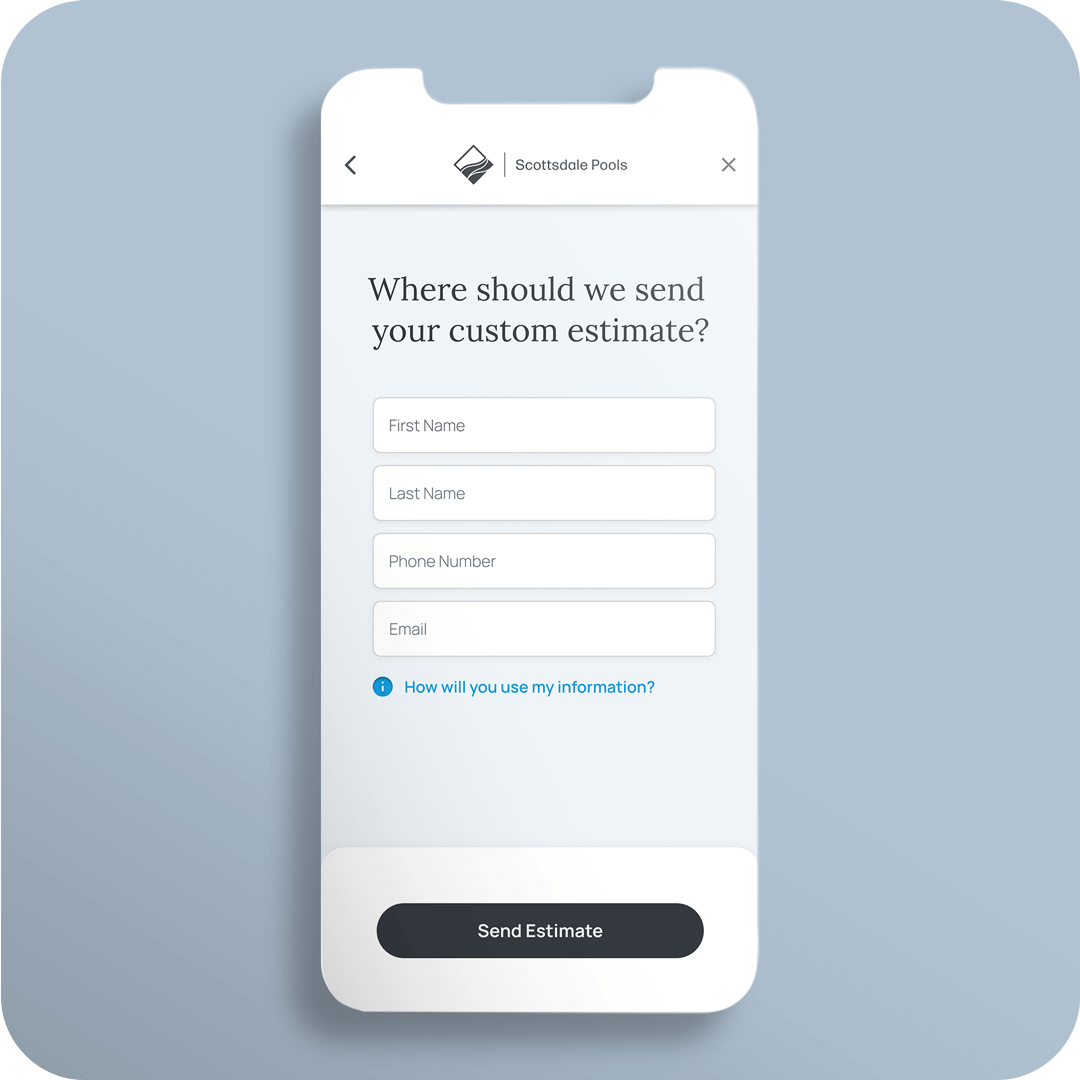
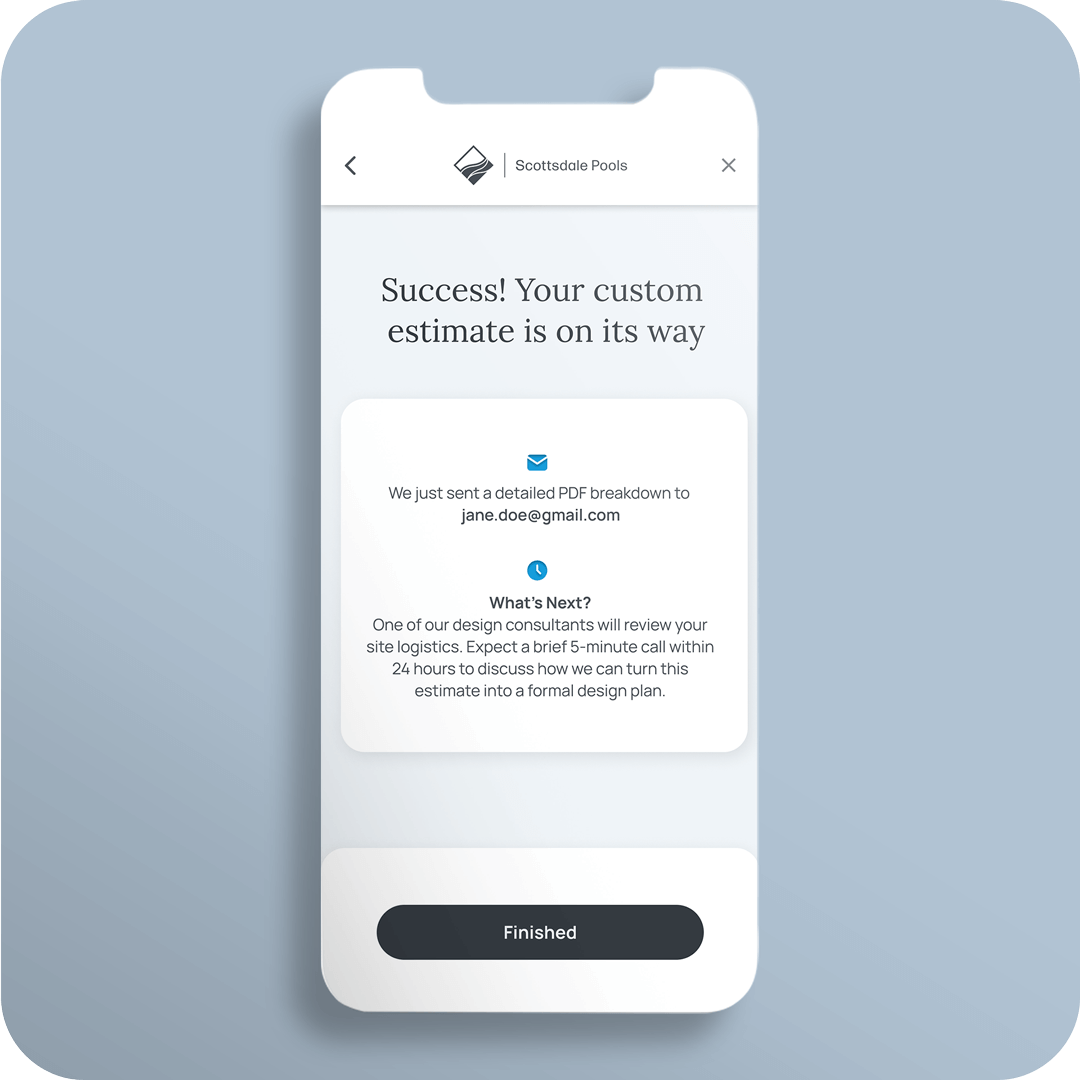
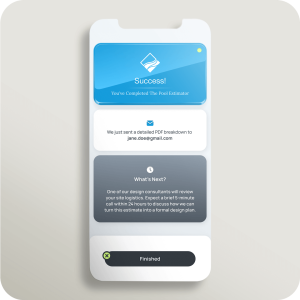
Clear call-to-actions, capturing lead information while providing value with a professional PDF or email recap.

Deliverables

User Research & Personas
User Flow & Logic Mapping
Interactive Prototypes
High-Fidelity UI Design
Usability Testing & Iteration
Design System

Role

UX/UI Designer

Timeline

3 weeks

Year

2026

RESEARCH

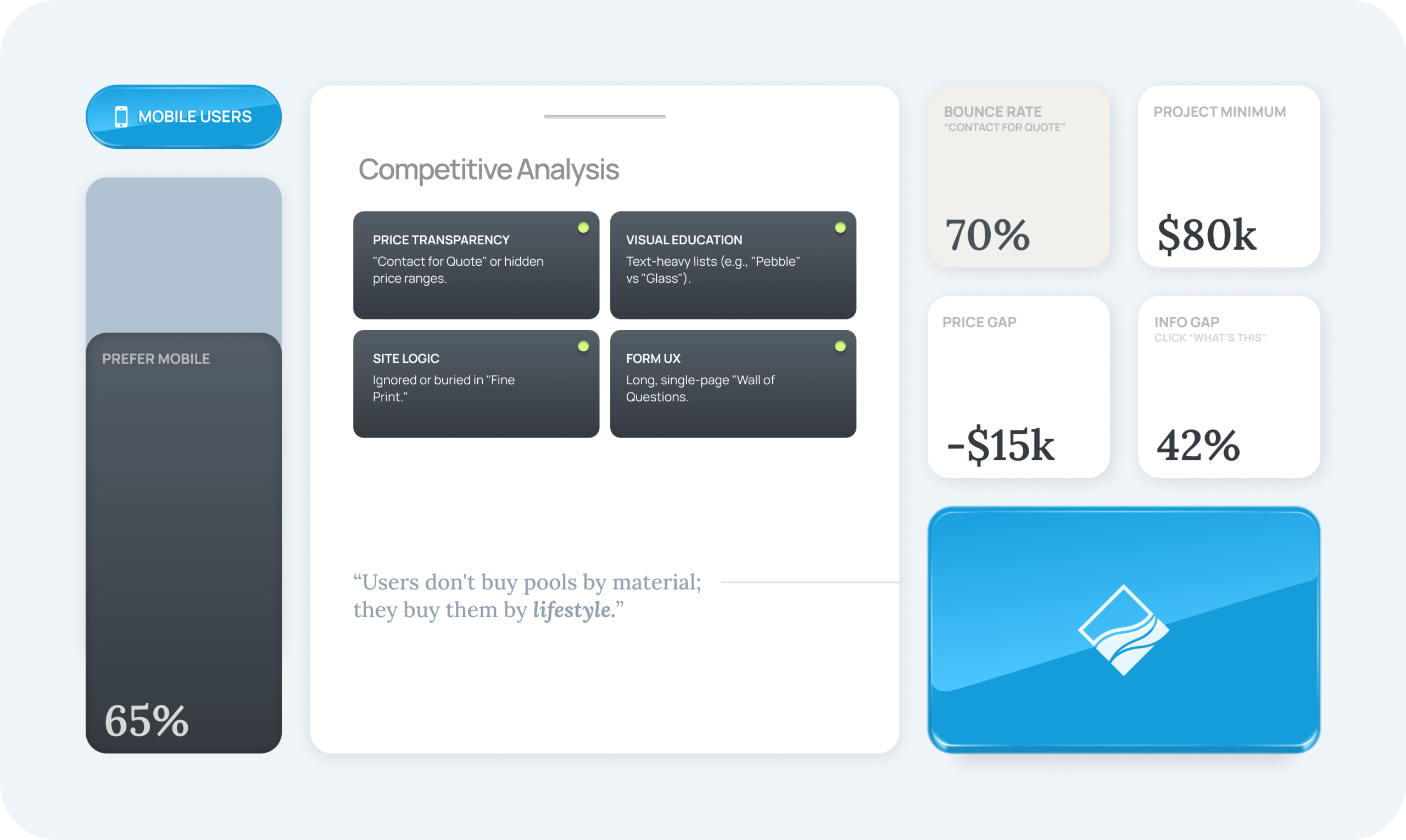
Identify mental models of pricing by understanding how users currently estimate pool costs and where their “sticker shock” thresholds lie.
Uncover information gaps and Determine which technical terms cause the most confusion and friction.
Evaluate trust signals by discovering what specific information or visual evidence users need to feel comfortable sharing their contact details.
Map the lead qualification journey by identifying the minimum information the sales team needs to distinguish a “serious buyer” from a “dreamer.”

DEFINE

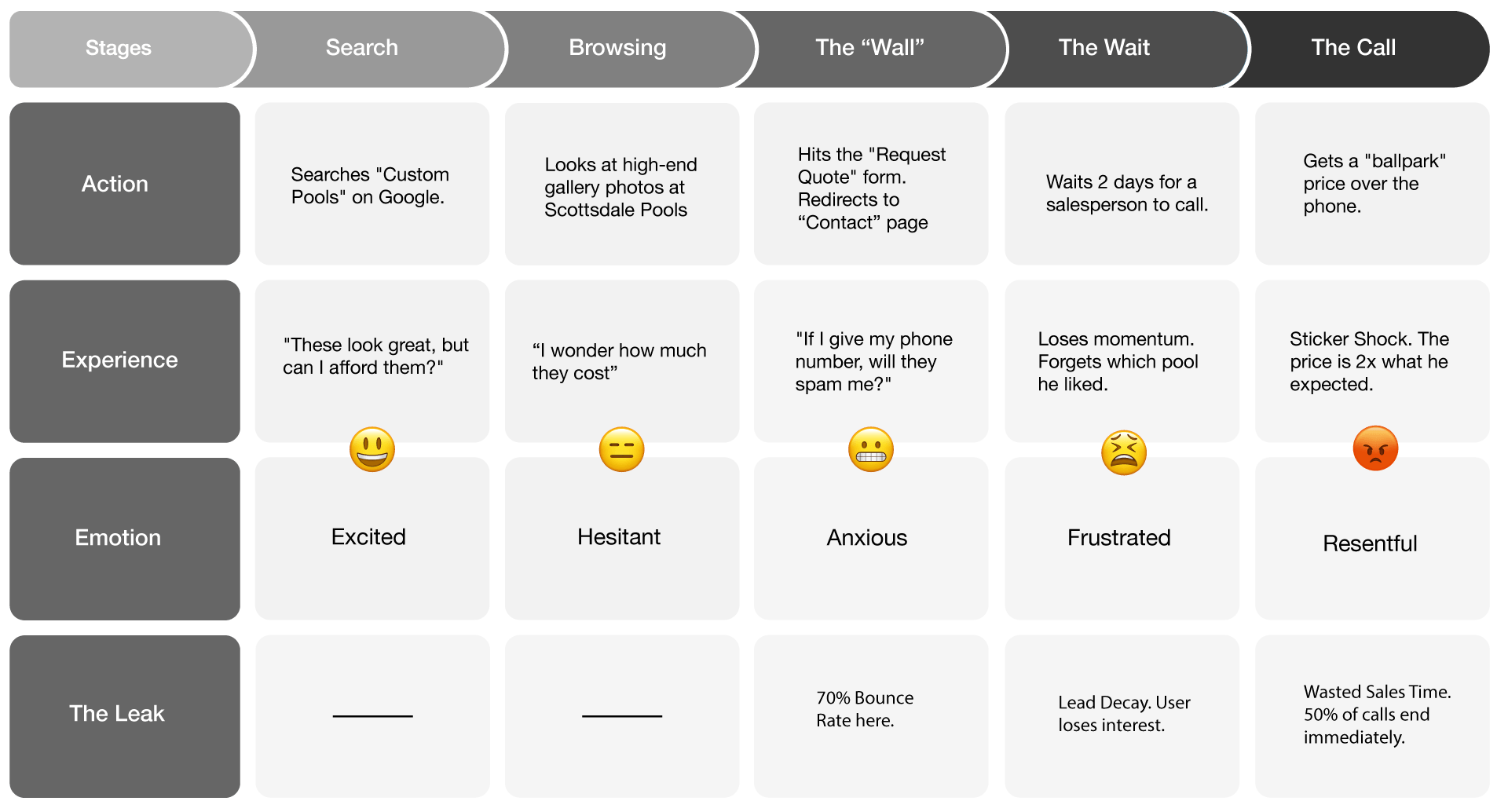
Scottsdale Pools, a luxury custom pool builder, was losing 70% of potential customers at the “Request a Quote” stage. High-end homeowners felt anxious about the lack of pricing transparency, while the sales team was overwhelmed by unqualified leads who couldn’t meet the $55k project minimum. We needed to replace a high-friction “black box” contact form with a transparent, estimate tool that qualified leads before they ever reached a salesperson.

IDEATE

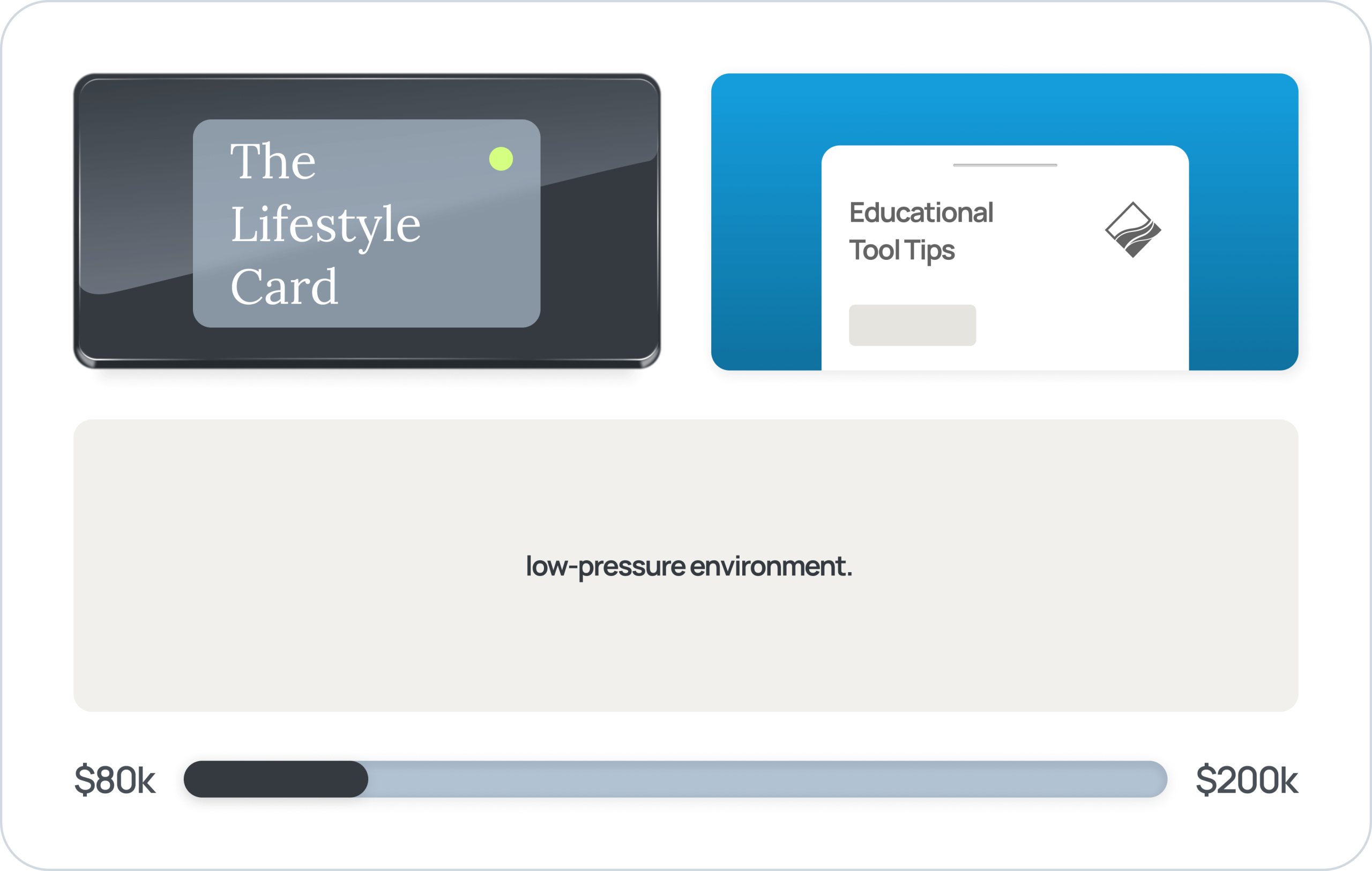
To ensure the success of the Quote Estimator, I mapped out the primary objectives for both Scottsdale Pools and their prospective clients. The challenge lay in the inherent tension between the two: the user wanted immediate, anonymous information, while the business wanted high-intent contact data. By identifying the “Sweet Spot” where these goals overlapped, I was able to design a solution that provided value to the customer while protecting the company’s sales resources.

Users Goals:
Instant pricing transparency
Low-pressure exploration
Visual inspiration
Business Goals:
Eliminate unqualified leads.
Shorten the sales cycle.
Showcase premium upsells.

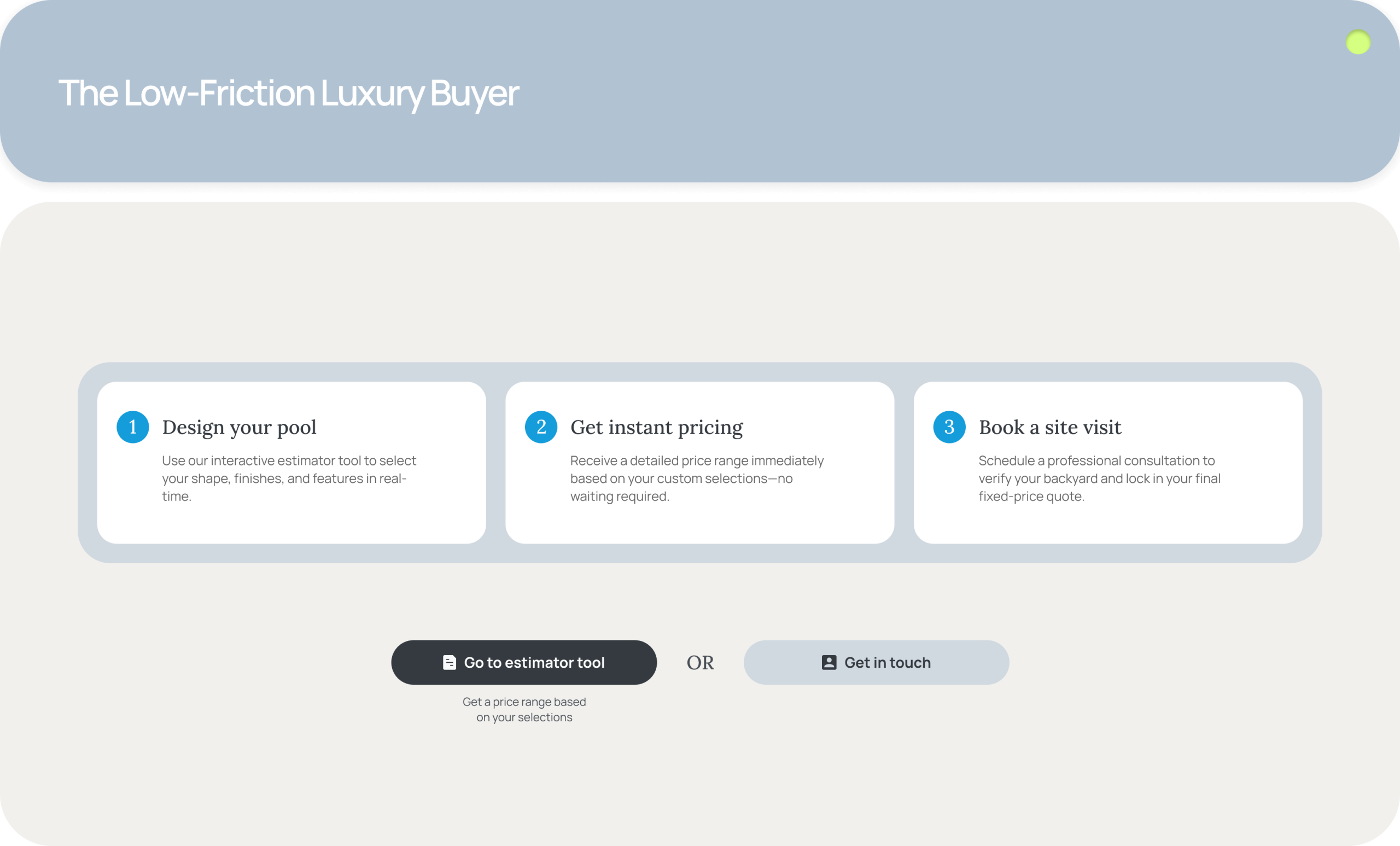
With a clear understanding of Brad’s (user persona) frustrations, I facilitated a series of collaborative sessions with the Scottsdale Pools stakeholders to bridge the gap between user anxiety and business needs. We moved away from the idea of a “better form” and instead looked for inspiration in high-end consumer configurators, such as luxury automotive and custom tech hardware sites. Our goal was to replicate the “white-glove” showroom experience digitally, allowing users to explore, play, and educate themselves in a low-pressure environment.

We focused on the concept of Progressive Disclosure, debating how much information to give for “free” versus what should be gated. We realized that for a luxury product starting at $55,000, the “Contact Us” button was a massive psychological barrier. By sketching out logic flows that prioritized visual feedback and real-time pricing updates, we aimed to transform the quoting process from a stressful interrogation into an aspirational design tool.

MOCKUP

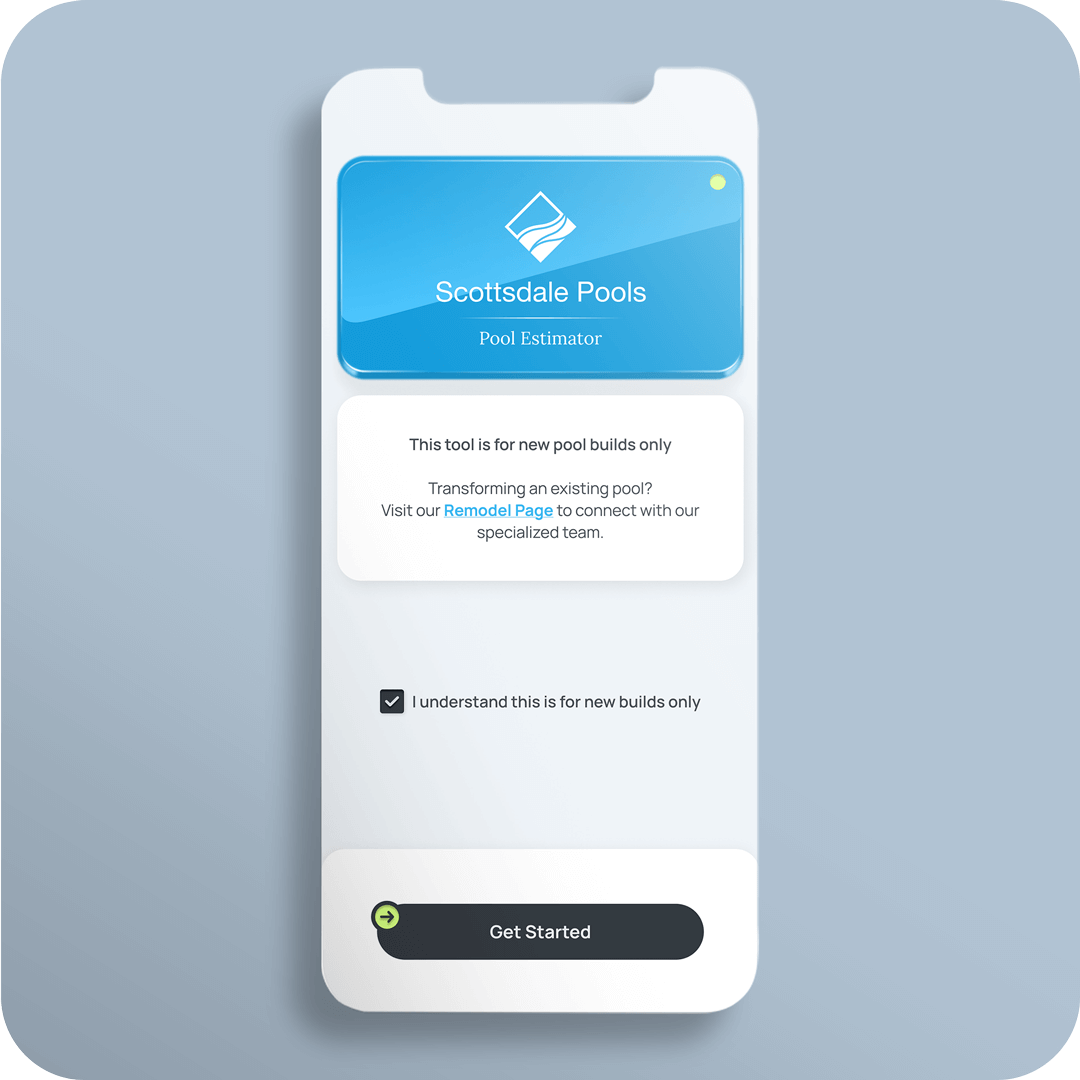
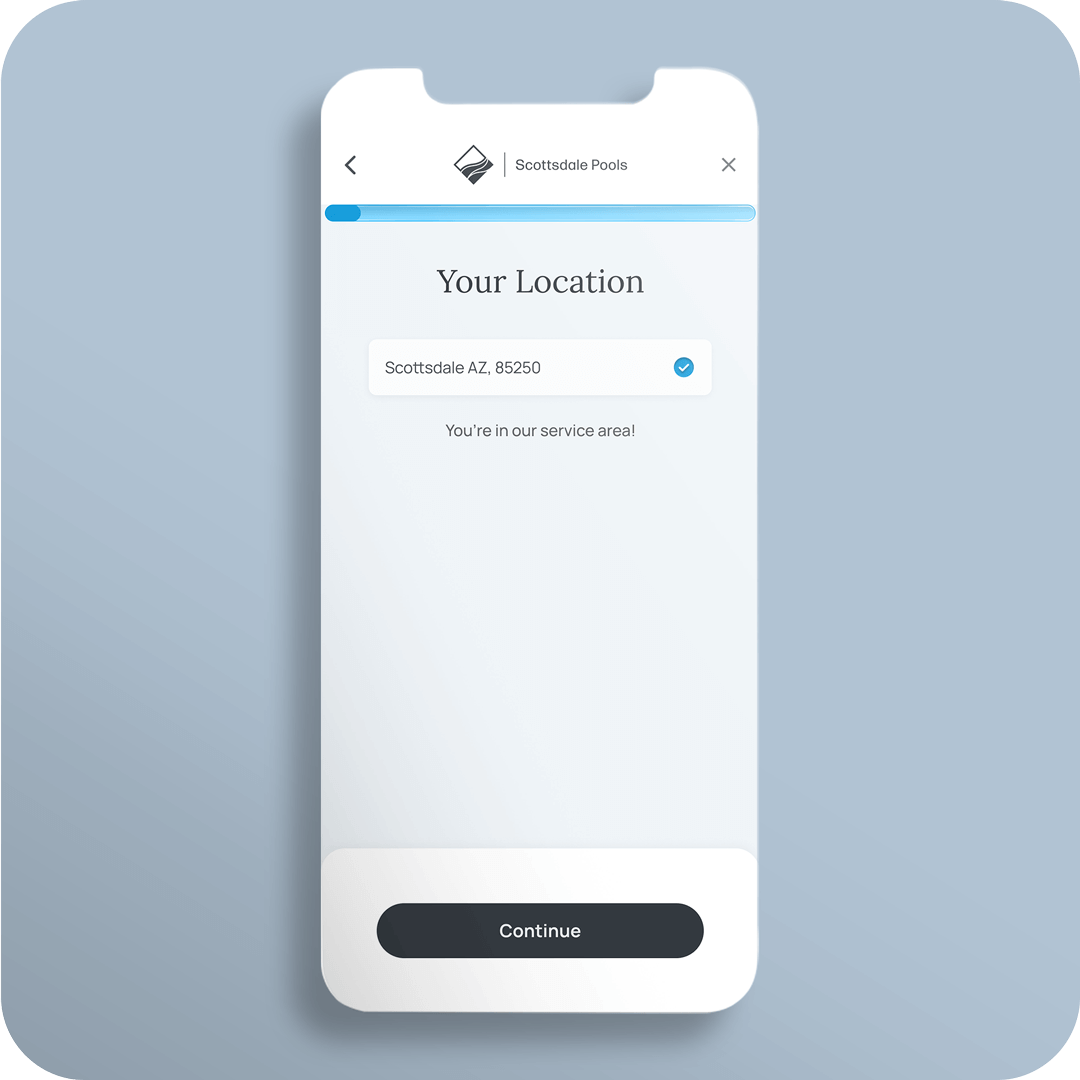
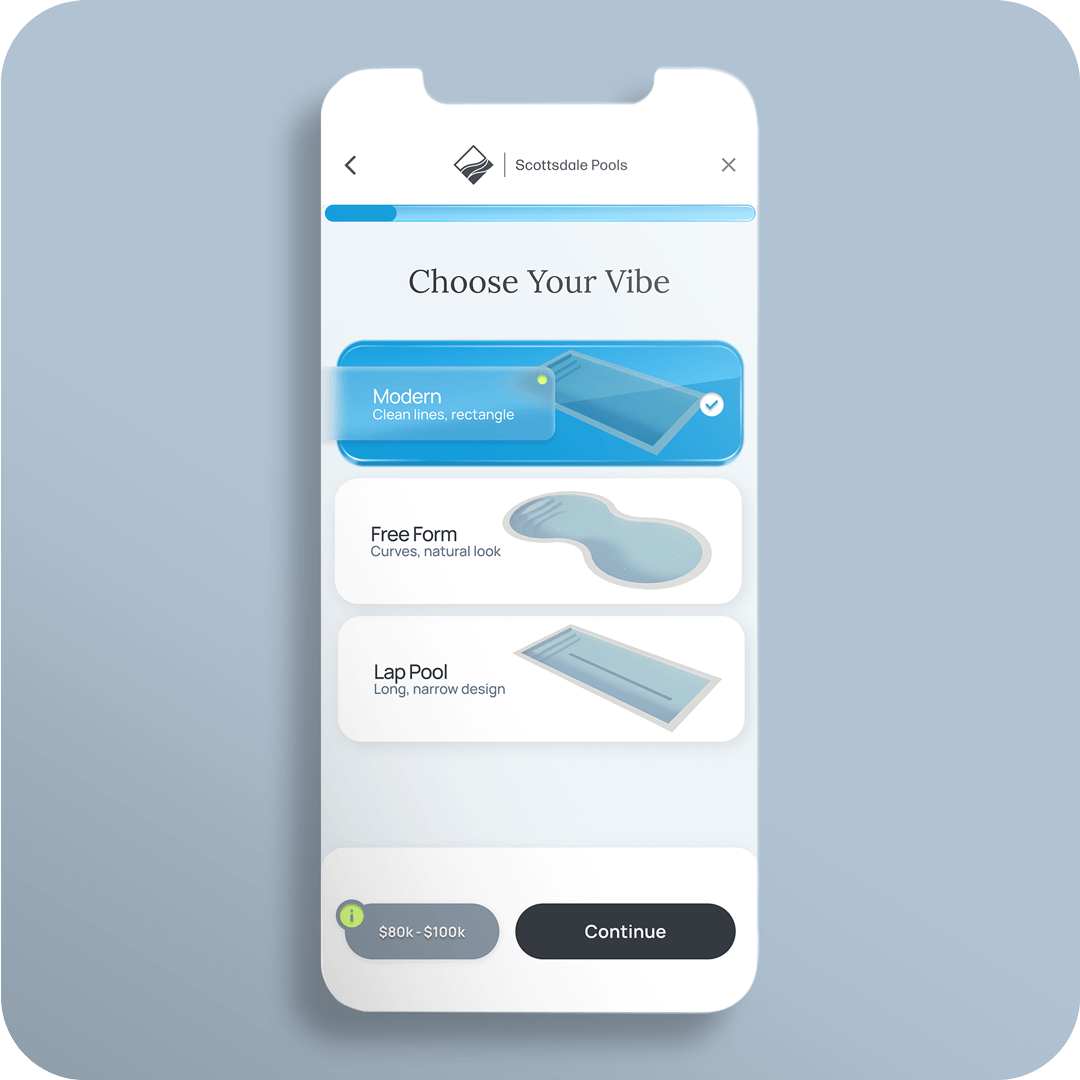
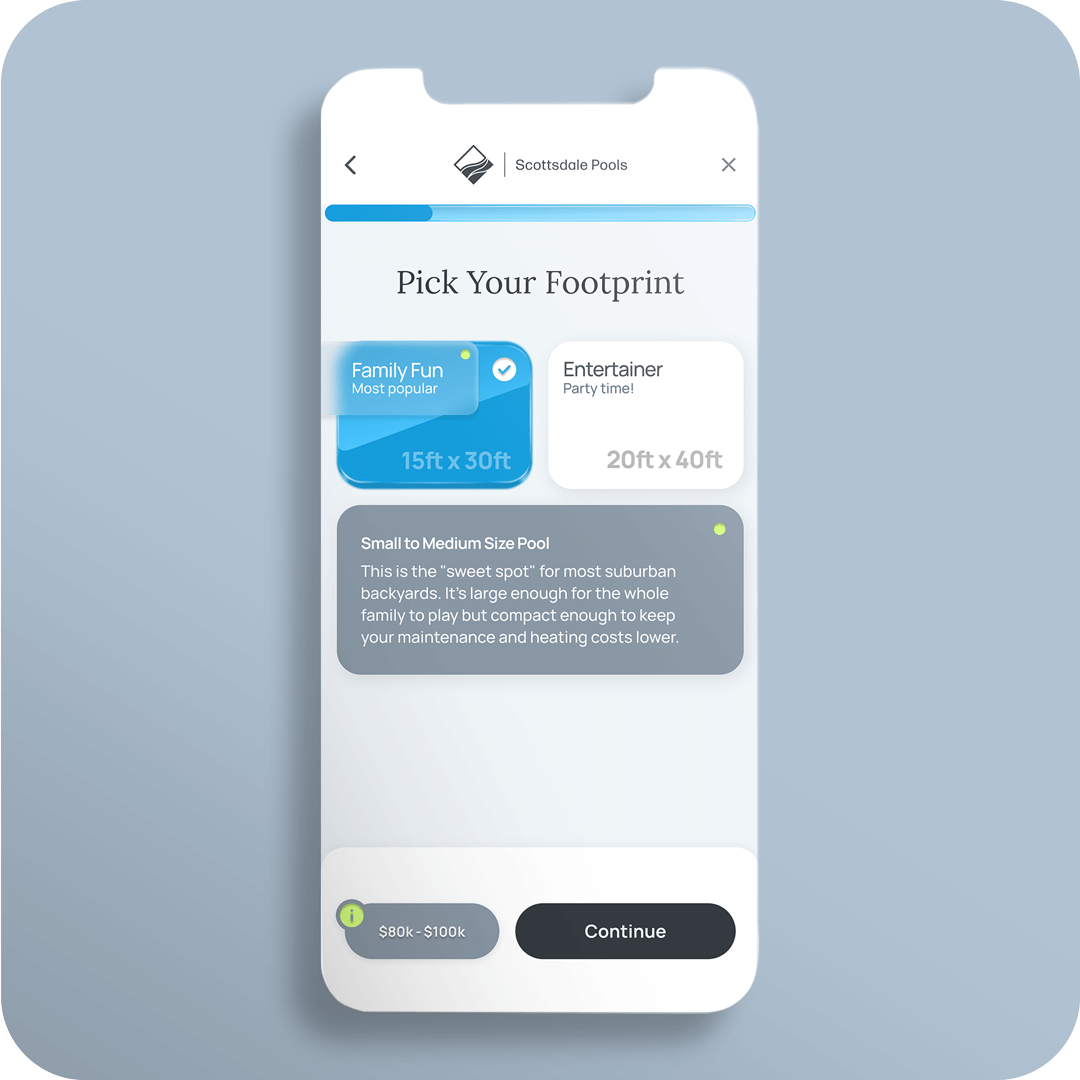
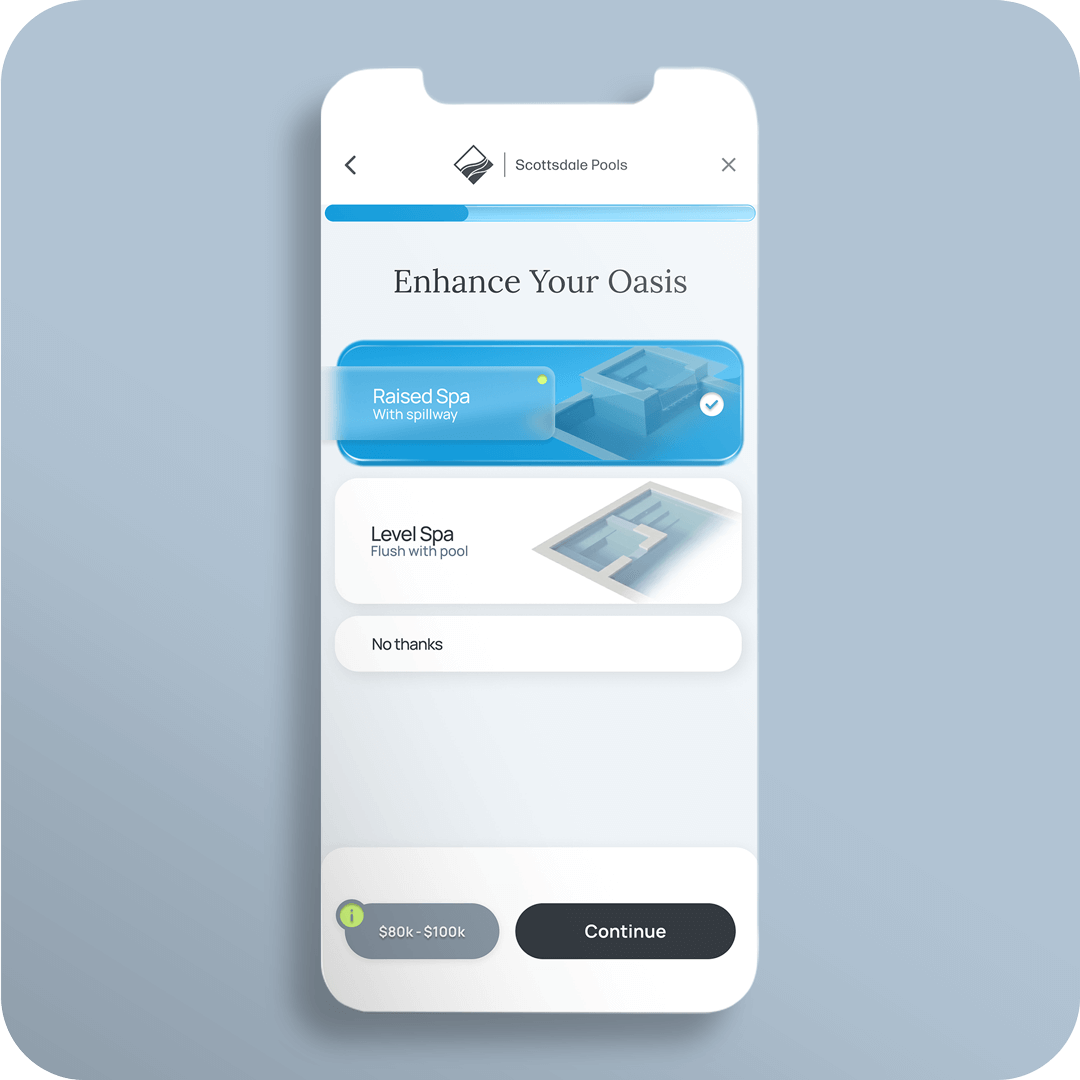
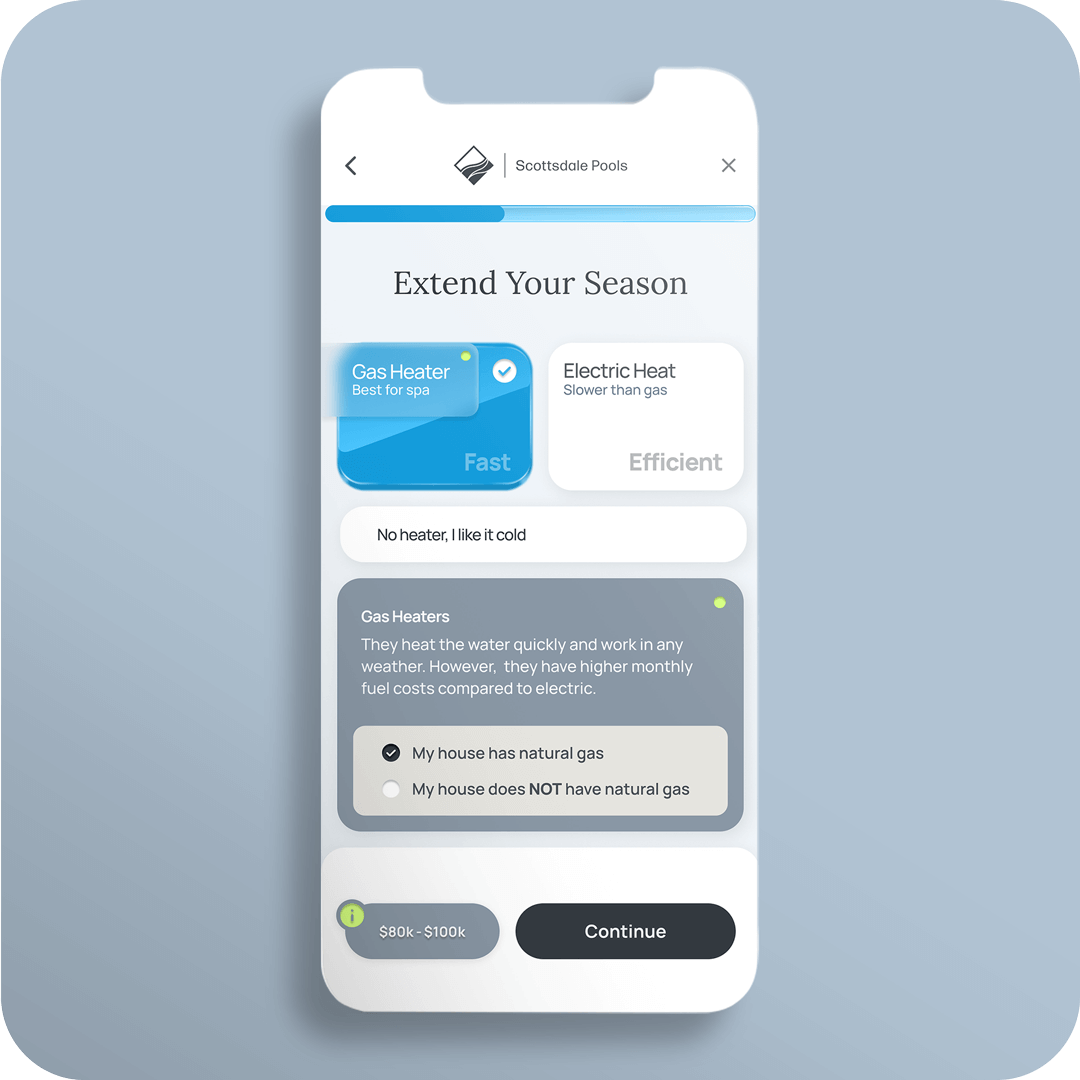
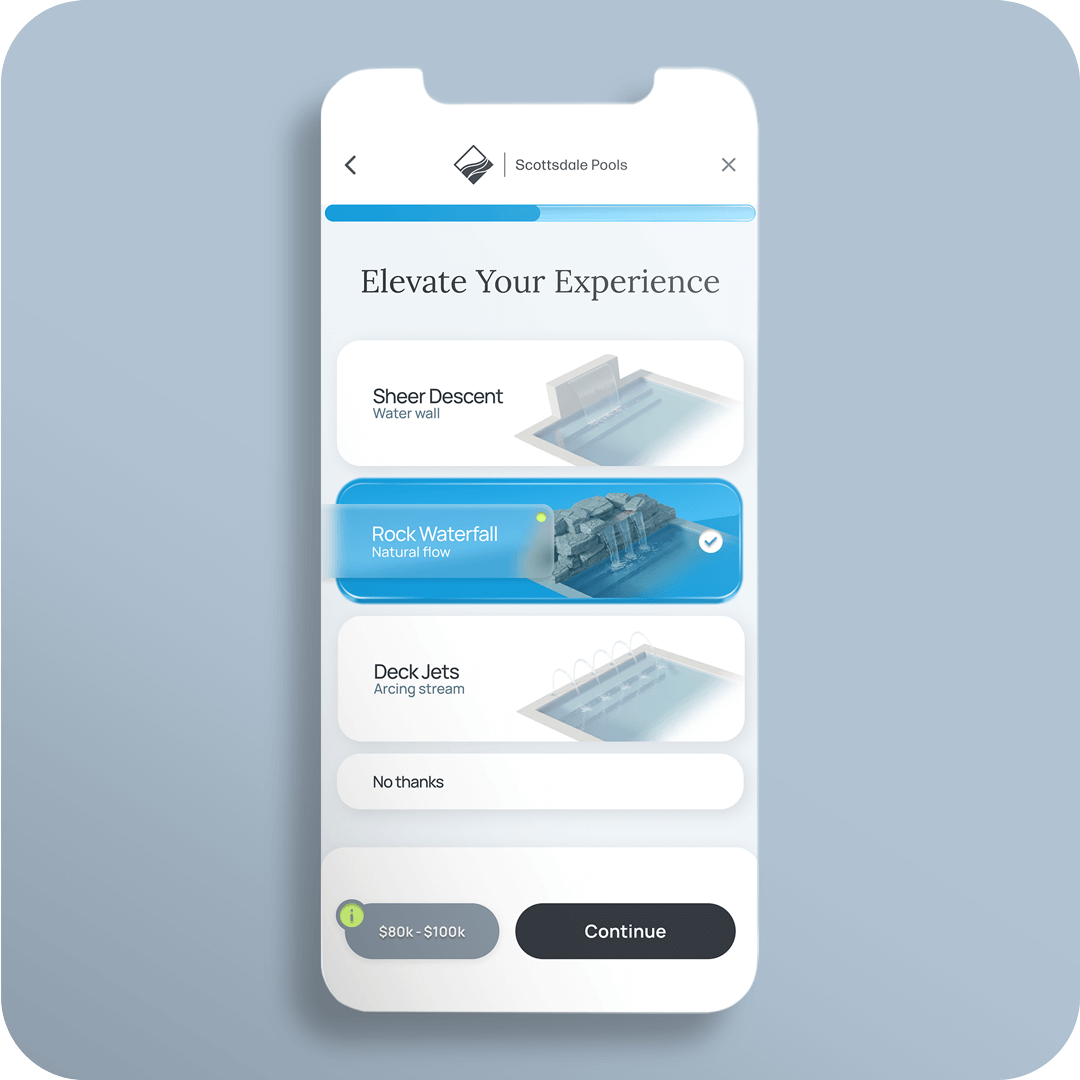
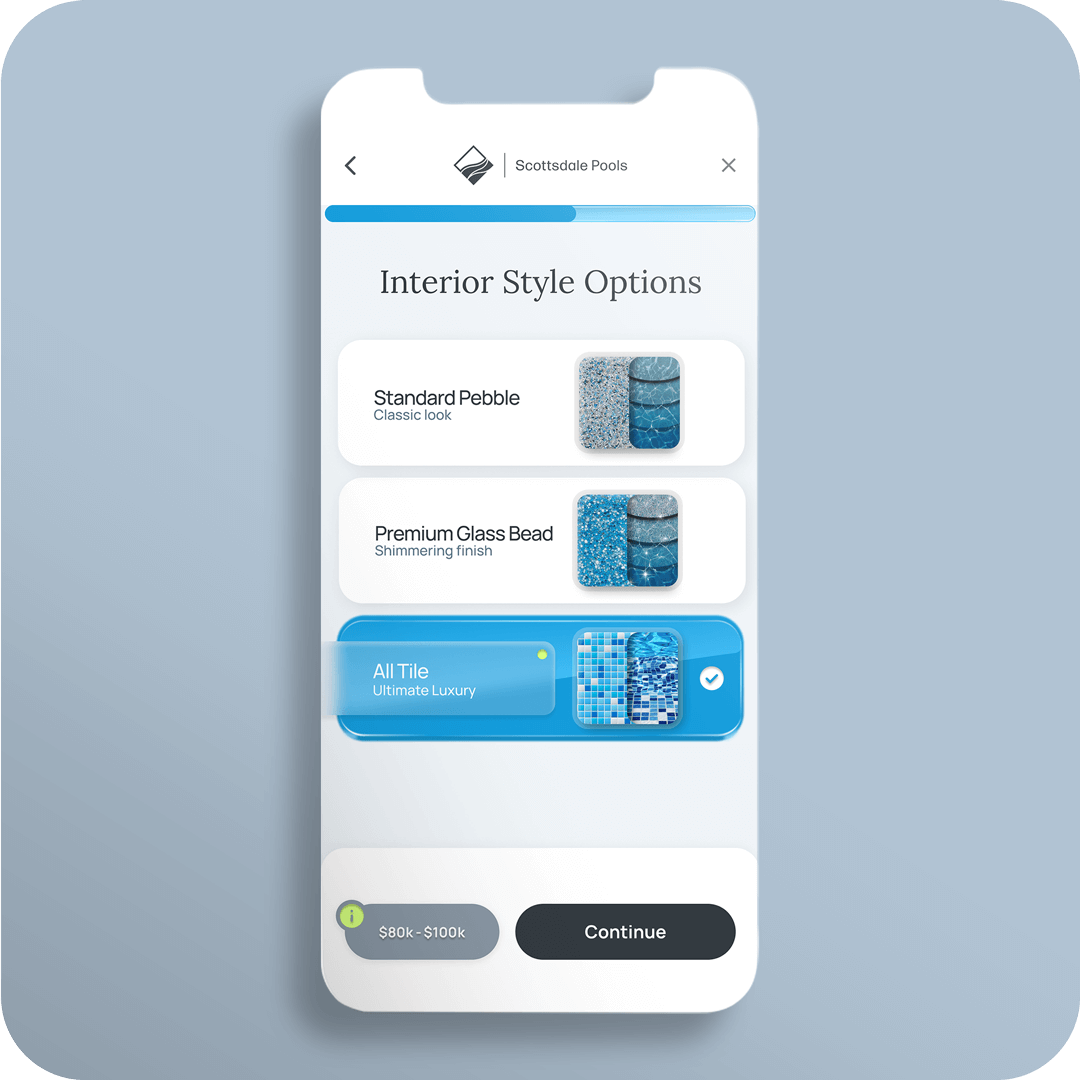
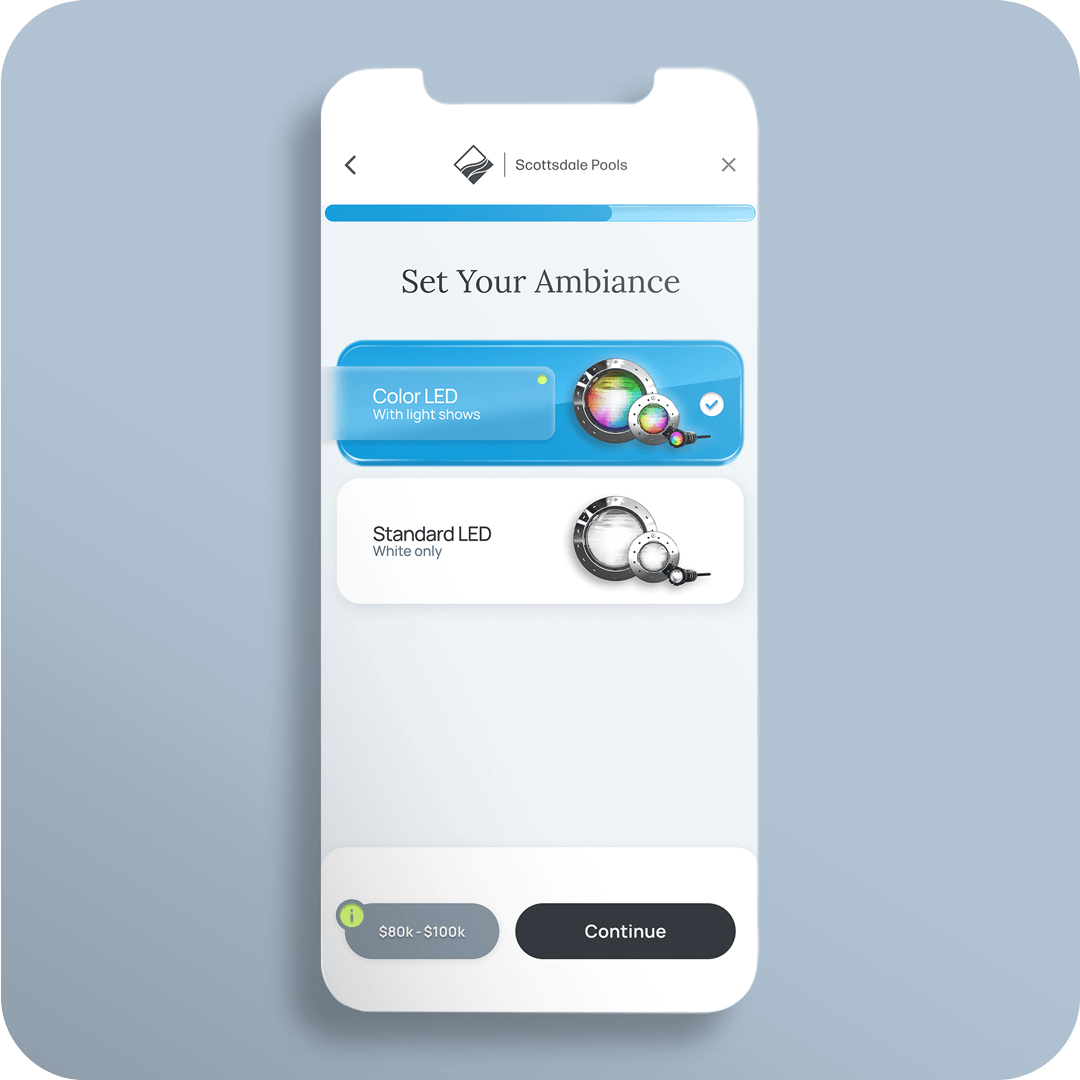
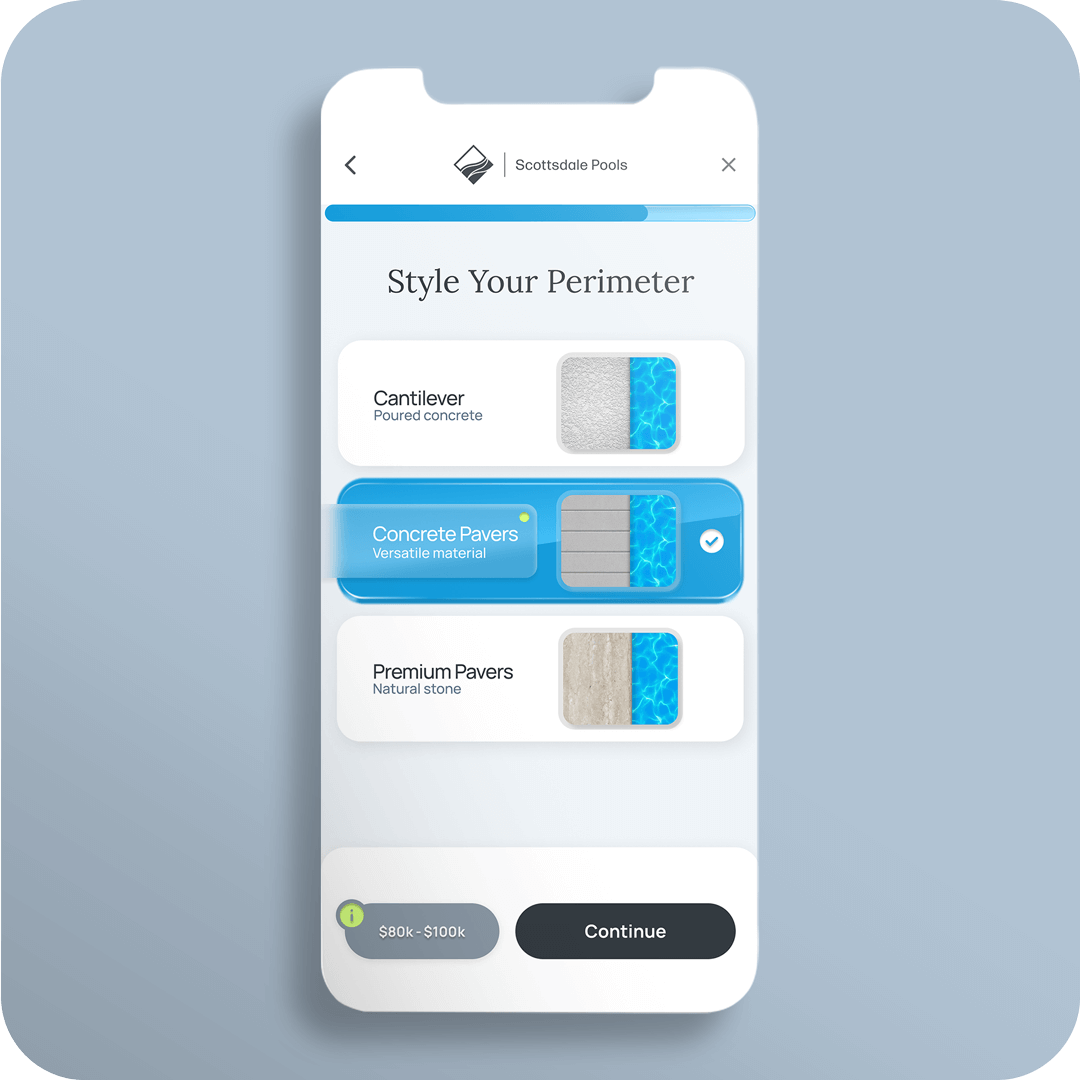
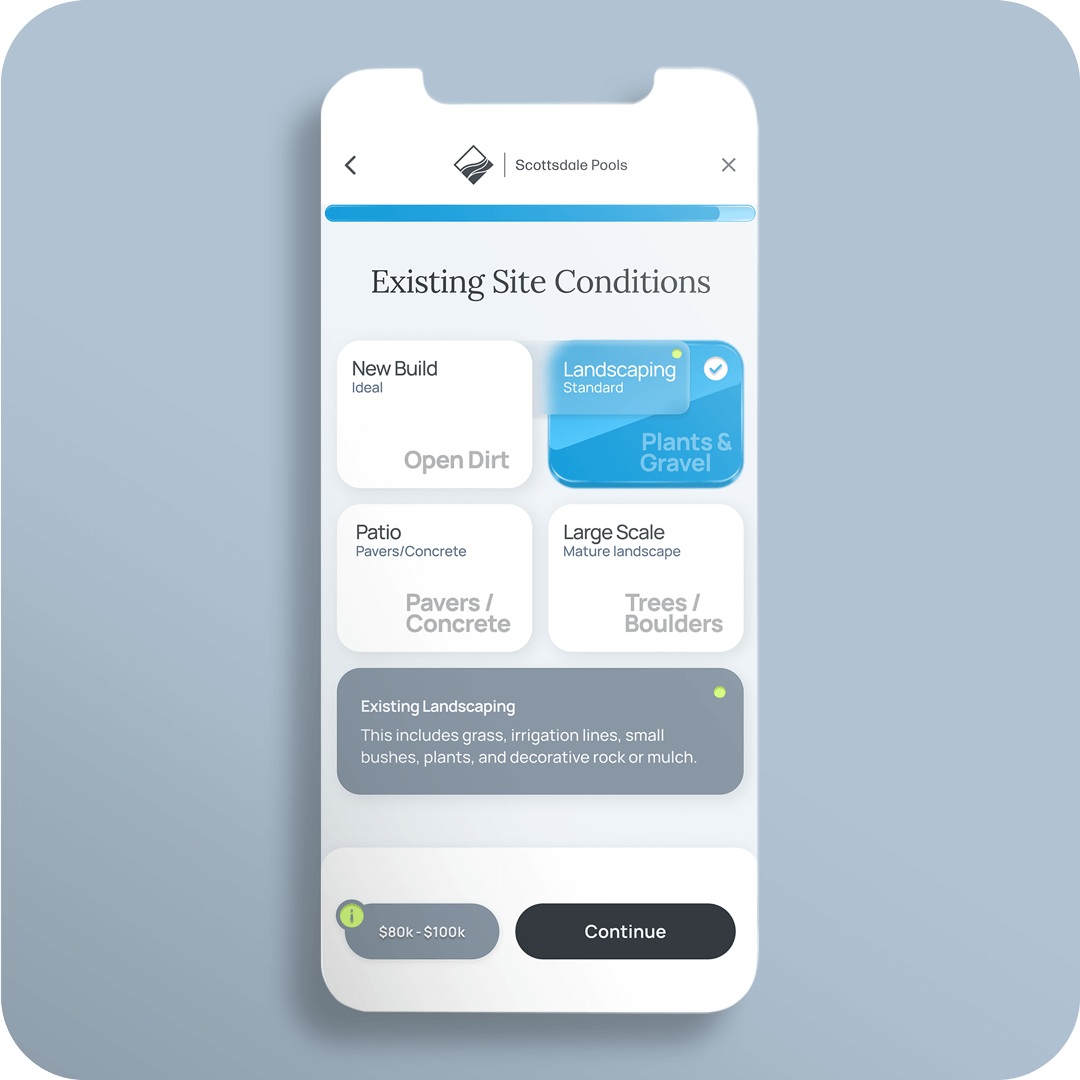
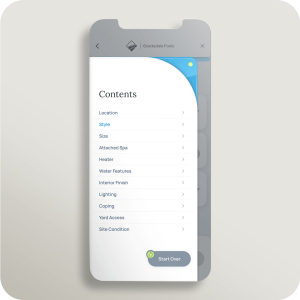
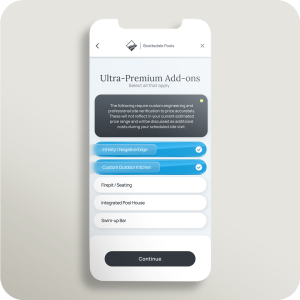
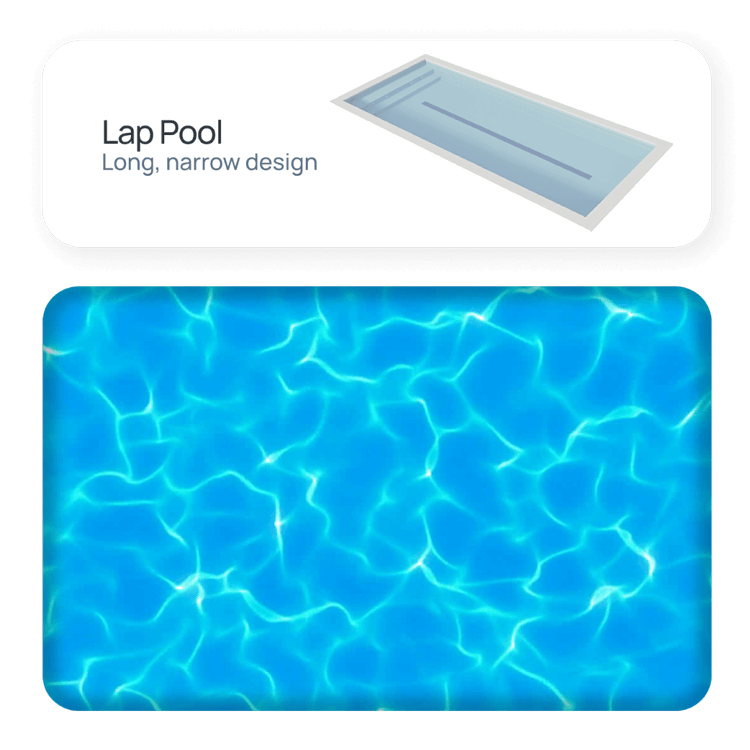
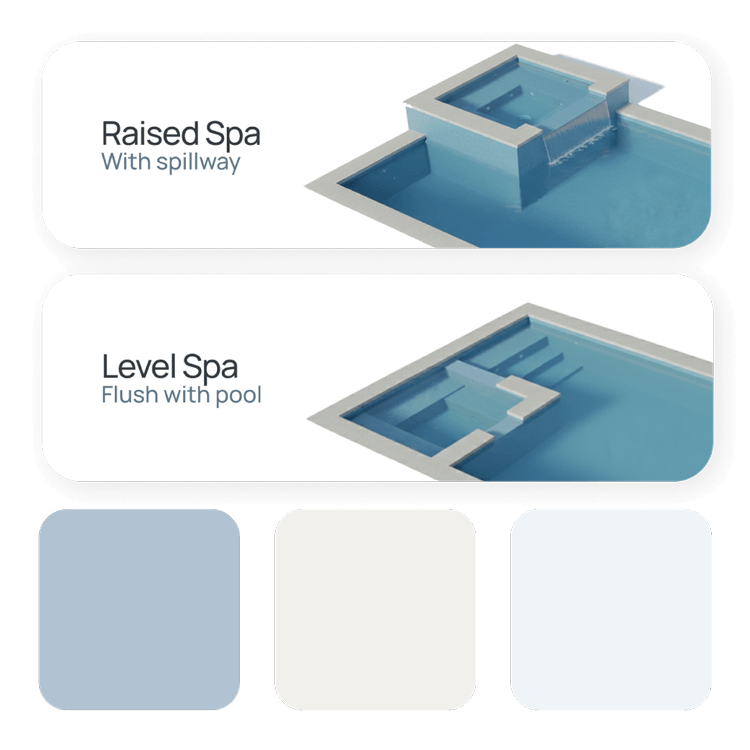
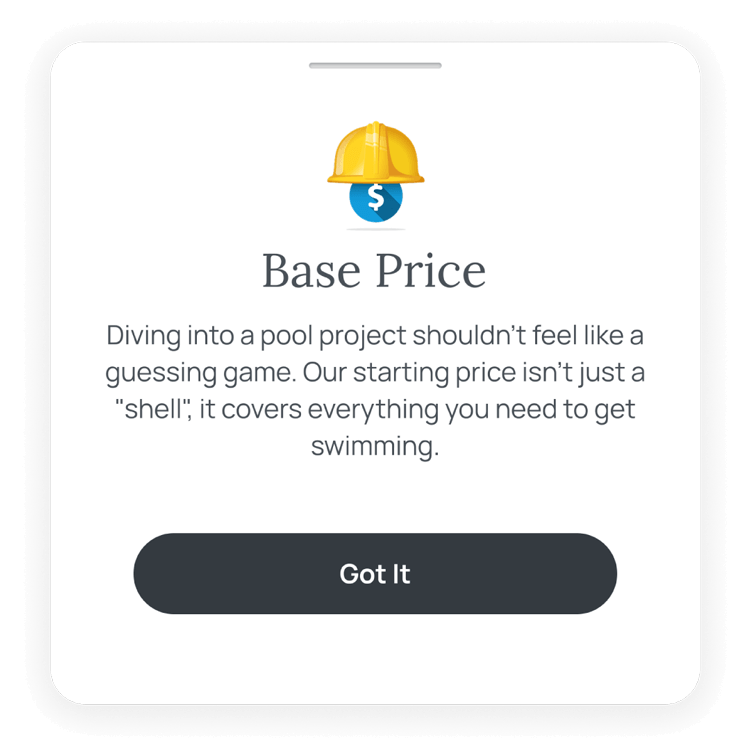
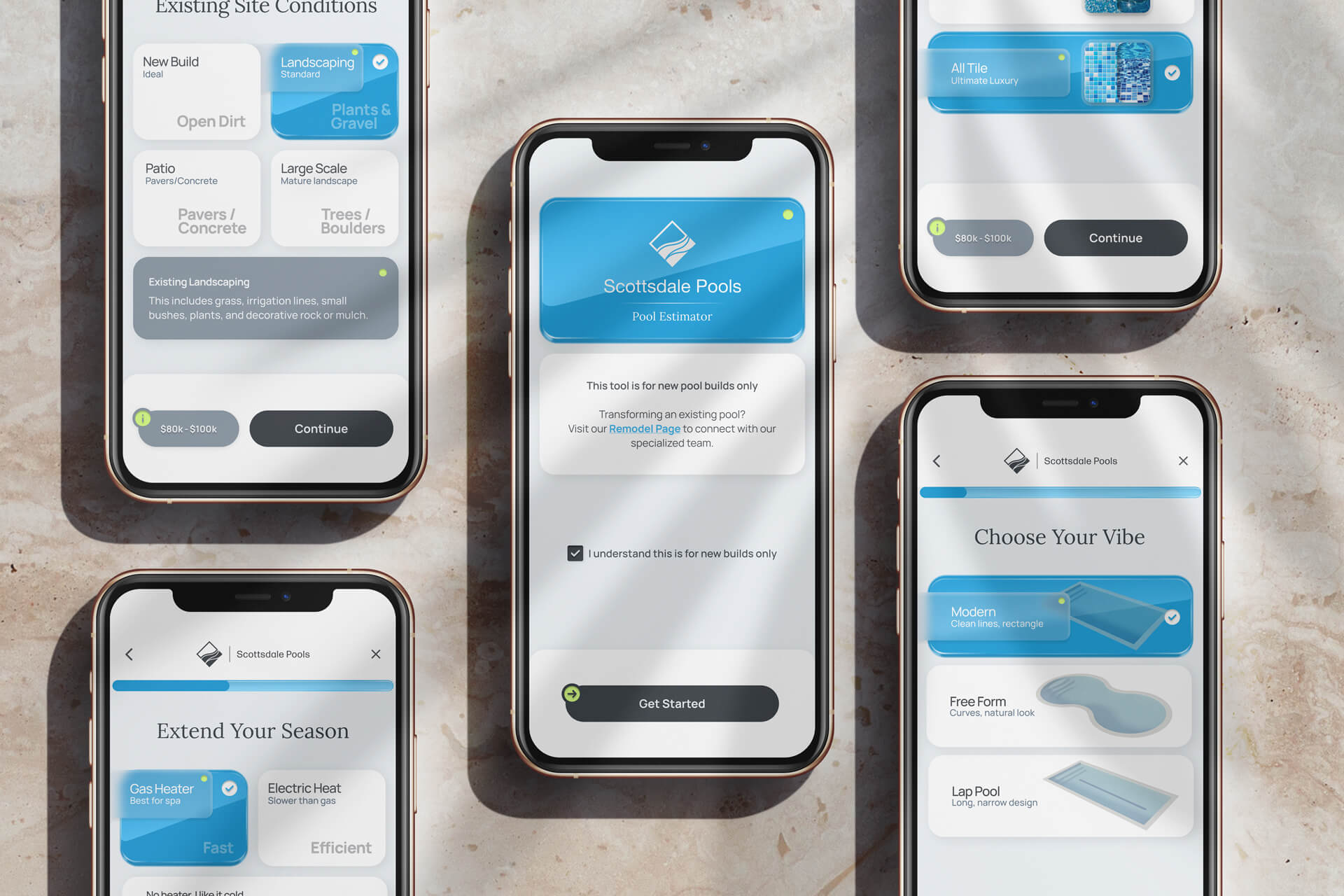
My transition to high-fidelity mockups focused on transforming a complex construction process into a premium, self-service experience. I utilized progressive disclosure to break the technical configuration into a digestible, card-based flow with imagery. To appeal to the data-driven user, I implemented a dynamic price range display for real-time transparency. To bridge the gap between technical data and user aspiration, I replaced dry industry jargon with lifestyle-driven copy, framing the estimator as a design journey rather than a construction form.

PROTOTYPE

My prototype design philosophy is rooted in the belief that a digital tool should feel like a collaborative consultation rather than a static form, prioritizing a narrative-driven flow that guides users from “dreaming” to “committing.”
By moving into high-fidelity early, I ensured that testing captured not just functional logic but authentic emotional responses to the brand’s premium value, maintaining a “Luxury Technical” aesthetic that builds immediate trust. I intentionally treated friction as a diagnostic tool, prototyping complex logistical hurdles to identify “micro-hesitations” and then solving them through progressive disclosure and lifestyle-driven copy.
Ultimately, my goal was to prove that a prototype should be a hypothesis in motion, one that protects the user’s emotional momentum by balancing technical accuracy with a seamless, aspirational design journey.

TESTING

Instead of a guided tour, participants were given a specific budget and a “wish list” (e.g., “Build a pool for $120k that includes a water feature, spa and pool heater”).
I recruited 11 participants from Scottsdale Pools current lead database who strictly matched the primary user persona: homeowners aged 35–55 with an annual household income of $150k+.
The Goal: Ensure the feedback came from people with real “buying intent” and a high standard for digital experiences.
Moderated think-aloud remote testing via Zoom using a high-fidelity Figma prototype.

ITERATION

IMPACT

LESSONS

The most significant takeaway from this project was discovering the gap between a user’s aspirational vision and their technical knowledge.
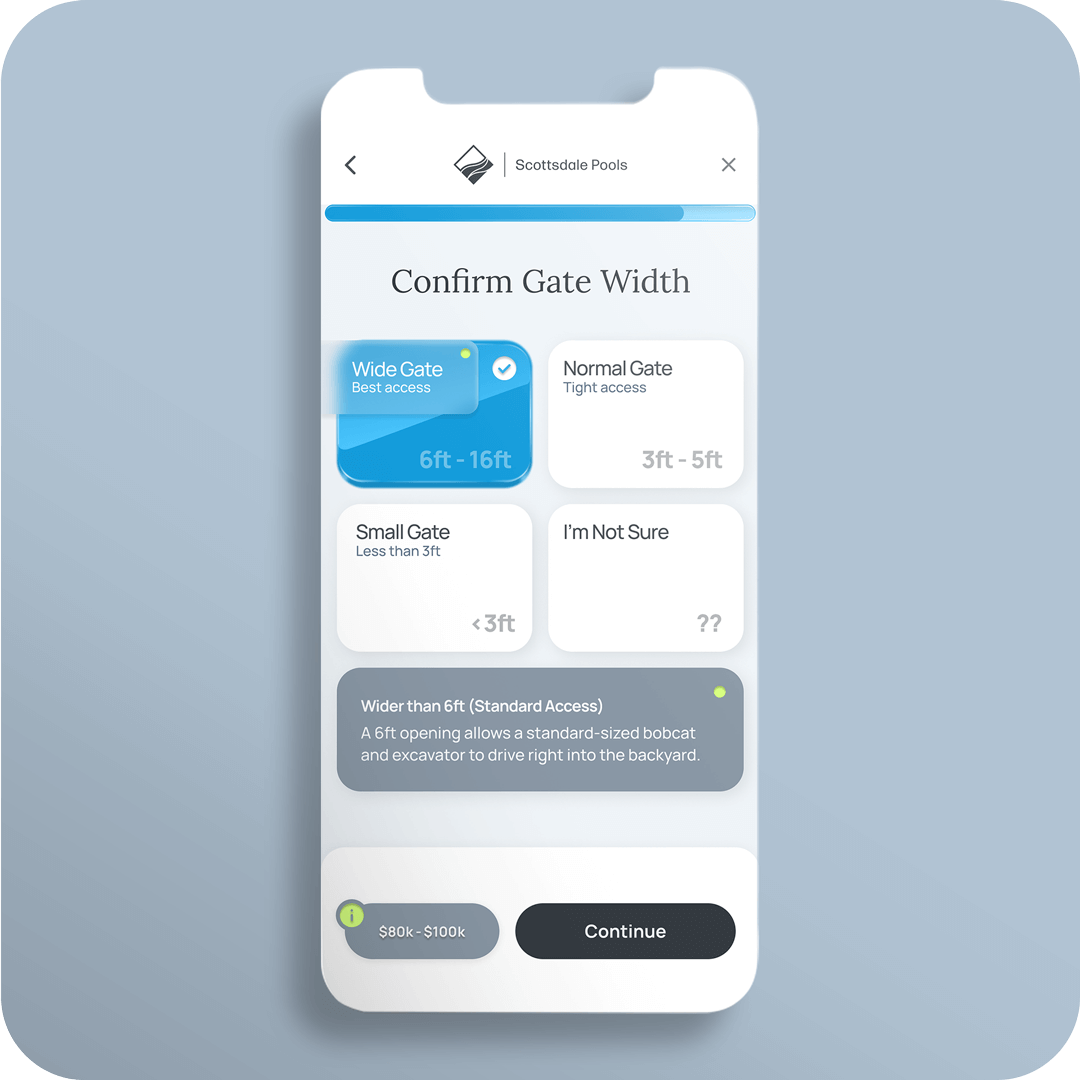
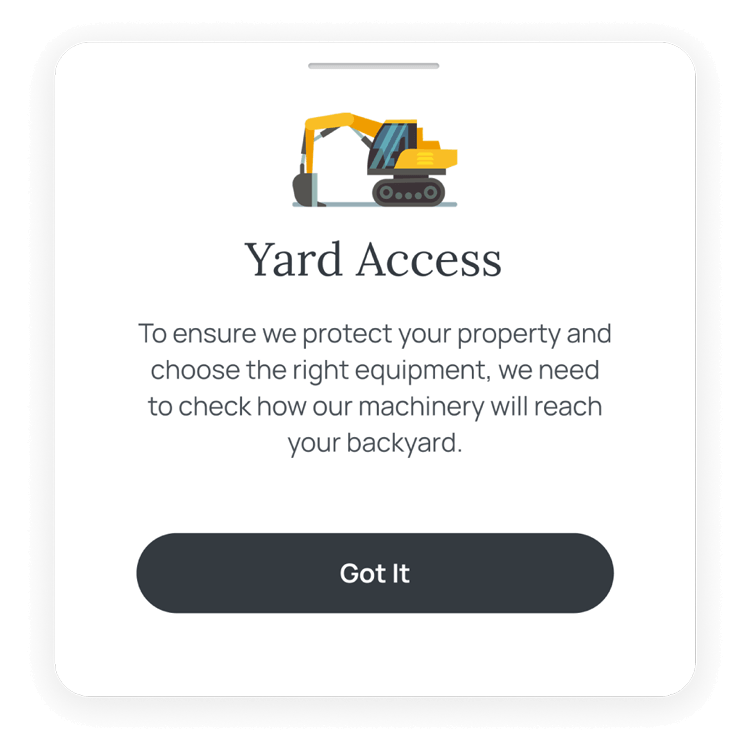
During early testing, I assumed that homeowners, the primary decision-makers, would have basic logistical data about their property. I was surprised to find that while users were highly confident in choosing finishes and features, they were completely sidelined by a simple question about gate width and utility easements. This “logistical friction” caused visible anxiety and, in some cases, nearly led to session abandonment.
Removing the “Dead End”: I introduced the “I’m Not Sure” smart-defaults to keep the momentum alive.
Visual Translation: I added relatable comparisons with technical measurements (e.g., “Narrow Gate” vs. “Wide Gate”).
In high-ticket industries like luxury construction, UX is about maintaining confidence. If a tool makes a user feel “uninformed,” they will leave. By designing for uncertainty, I was able to keep users moving through the funnel, proving that protecting the user’s momentum is just as important as the accuracy of the final number.

UI DESIGN

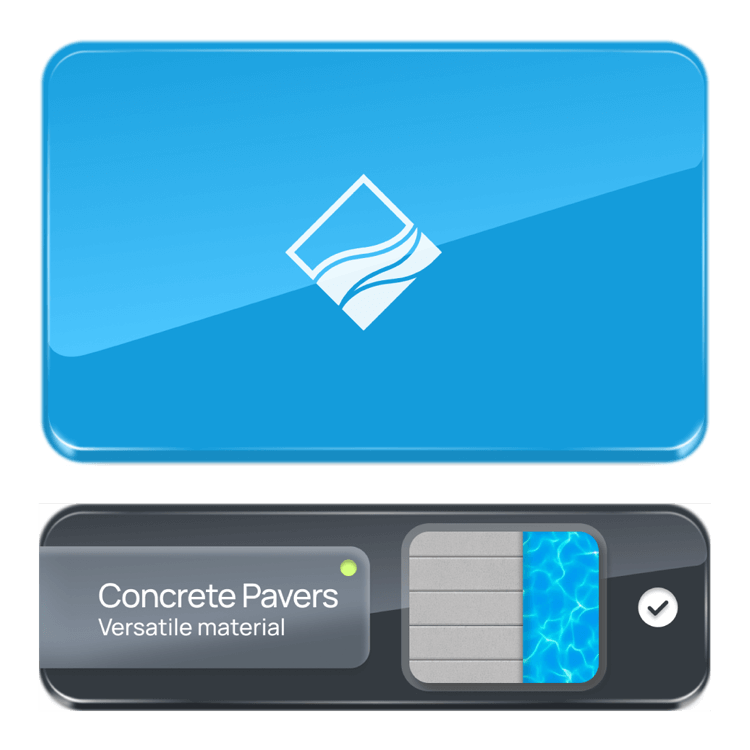
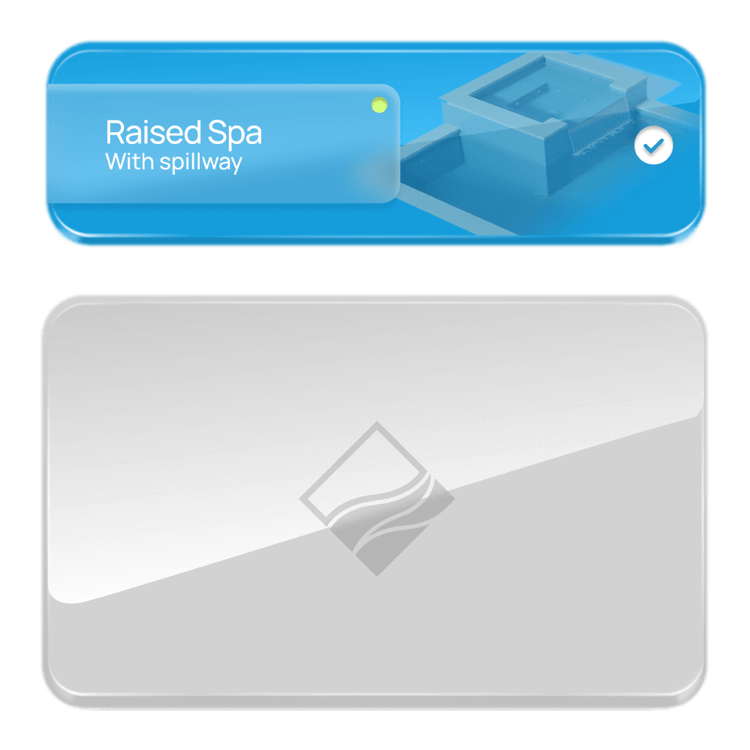
I used a glassmorphic and fluid aesthetic to create a premium, immersive user experience that mirrors the product itself. By combining high-gloss textures and soft gradients with clear, illustrative iconography, the design is meant to transform a complex construction process into a transparent and approachable journey. The modular cards and high-contrast selection states are strategically designed to reduce user anxiety and simplify decision-making, ensuring that technical details feel like seamless steps toward a luxury purchase rather than overwhelming obstacles.
Scroll to Top